
In today’s competitive business environment, protecting intellectual property has become more important than ever. Businesses invest significant time, effort, and money into creating brand identities, innovative products, creative content, and unique technologies. However, many entrepreneurs and startups still struggle to understand which type of intellectual property protection they actually need.
Terms like trademark, copyright, and patent are often used interchangeably, even though they protect completely different types of assets. Choosing the wrong form of protection can leave a business vulnerable to duplication, misuse, or legal disputes. This is why understanding the difference between these intellectual property rights is essential for startups, creators, manufacturers, and growing businesses.
This guide explains the difference between trademark vs copyright vs patent, how each protection works, and which one is best suited for your business needs.
Understanding Intellectual Property Protection
Intellectual property refers to creations of the mind that have commercial or creative value. This may include brand names, logos, inventions, product designs, software, written content, music, videos, and business innovations.
Intellectual property protection gives businesses and individuals legal rights over their creations. It prevents unauthorized use, duplication, or commercial exploitation by competitors or third parties.
Companies investing in intellectual property services India generally create stronger legal protection for their assets and improve long-term business security.
Choosing the correct intellectual property protection depends on the type of asset you want to secure.
What Is a Trademark?
A trademark is used to protect a brand identity. It can include a business name, logo, slogan, symbol, tagline, packaging design, or even a sound associated with a business.
Trademark registration gives the owner exclusive rights to use that mark for specific goods or services. It helps customers identify and distinguish a brand from competitors in the market.
For example, company logos, product names, and business taglines are usually protected through trademarks. Businesses investing in trademark registration services India protect their brand reputation and prevent competitors from using similar identities.
Trademark protection is especially important for startups, e-commerce businesses, consumer brands, and service-based companies.
How Trademark Protection Works
Trademark rights are generally granted after registration with the appropriate intellectual property authority. Once approved, the trademark owner receives legal rights to use the mark exclusively within the registered category.
Trademark registration also allows businesses to take legal action against infringement or unauthorized usage. It strengthens brand credibility and creates long-term business value.
Companies using brand protection services India often secure their logos, names, and visual identities early to avoid future disputes and market confusion.
Trademark protection can usually be renewed indefinitely as long as the mark remains in active commercial use.
What Is Copyright?
Copyright protects original creative works created by authors, artists, designers, musicians, filmmakers, writers, software developers, and content creators. This includes books, music, videos, artwork, photographs, blogs, website content, software code, and digital media.
Unlike trademarks, copyright focuses on protecting creative expression rather than brand identity. Copyright ownership usually exists automatically once the original work is created and fixed in a tangible format.
Businesses and creators investing in copyright protection services India often secure their content to prevent unauthorized copying or reproduction.
Copyright protection is highly important for digital creators, media companies, educational platforms, publishers, and software businesses.
How Copyright Protection Works
Copyright gives creators exclusive rights to reproduce, distribute, publish, or commercially use their original work. It also allows them to control adaptations, modifications, and licensing agreements.
Although copyright protection arises automatically in many cases, formal registration strengthens legal evidence in case of disputes or infringement claims.
Companies using copyright registration services India generally gain stronger legal support for protecting digital and creative assets.
Copyright protection has become increasingly important because digital content is easily copied and distributed online.
What Is a Patent?
A patent protects inventions, technological innovations, manufacturing processes, and unique product developments. Patents grant inventors exclusive rights to use, manufacture, or sell their inventions for a limited period.
Patents are commonly used for machines, software technologies, industrial products, chemical formulas, medical devices, and engineering innovations.
Businesses investing in patent registration services India secure their innovations from duplication and gain competitive advantages in the market.
Patent protection is especially important for manufacturing companies, technology startups, pharmaceutical businesses, and research-driven organizations.
How Patent Protection Works
Patent registration involves a detailed legal and technical evaluation process. The invention must be unique, innovative, and commercially applicable to qualify for protection.
Once approved, the patent owner gains exclusive rights over the invention for a specified duration. During this period, competitors cannot legally manufacture or sell the patented product or process without authorization.
Organizations using intellectual property consulting services India often receive expert support in preparing patent applications and protecting technological innovations effectively.
Patent protection helps businesses secure research investments and encourage innovation.
Key Difference Between Trademark, Copyright, and Patent
The biggest difference between these protections lies in what they actually secure.
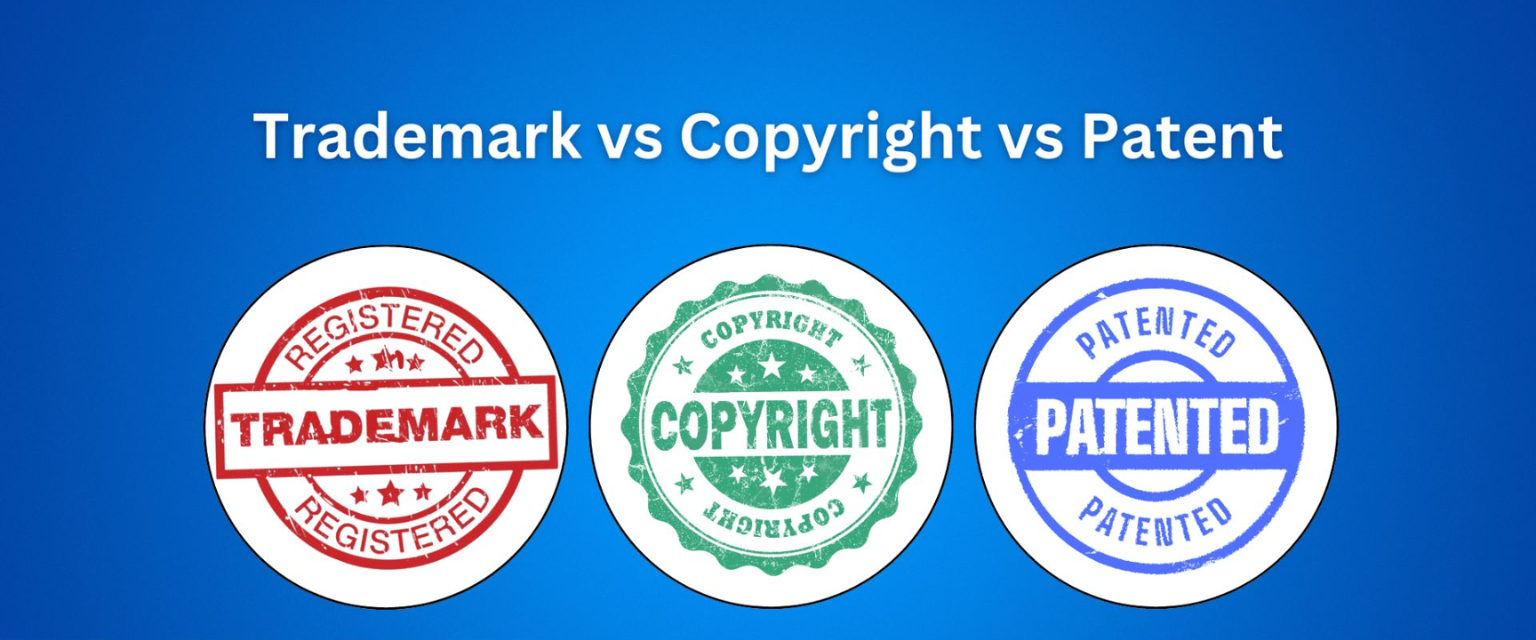
A trademark protects brand identity such as names, logos, and slogans. Copyright protects creative and artistic works. Patents protect inventions and technological innovations.
Businesses often confuse these categories and attempt to use one type of protection for assets that require another. Understanding these distinctions is essential for effective legal protection.
Here is a simple comparison:
- Trademark protects branding elements.
- Copyright protects creative content.
- Patent protects inventions and innovations.
Companies focusing on corporate intellectual property protection India generally combine multiple forms of protection depending on their operational needs.
When Businesses Need a Trademark
A trademark is essential when a business wants to protect its identity in the market. Companies building recognizable brands should secure trademarks as early as possible to avoid imitation and brand misuse.
Trademark registration becomes especially important for:
- Startups launching new brands
- E-commerce businesses
- Product manufacturers
- Restaurants and cafes
- Service-based businesses
- Technology companies
Businesses investing in trademark consulting services India usually create stronger brand recognition and long-term market credibility.
Without trademark protection, competitors may use similar names or branding elements that confuse customers.
When Businesses Need Copyright Protection
Copyright protection is important for businesses and creators producing original content. Companies involved in media production, software development, digital marketing, education, or entertainment should prioritize copyright protection.
Examples of copyright-protected works include:
- Website content
- Blogs and articles
- Videos and graphics
- Software code
- Music and podcasts
- Training materials
Organizations using copyright compliance services India generally maintain stronger ownership rights over digital and creative assets.
Copyright protection also supports licensing and monetization opportunities.
When Businesses Need Patent Protection
Patent protection is necessary for businesses creating innovative technologies, manufacturing processes, or unique products. Companies investing heavily in research and development should secure patents to protect their innovations from competitors.
Patent protection is commonly used in:
- Technology startups
- Manufacturing industries
- Pharmaceutical companies
- Engineering businesses
- Medical device manufacturers
Businesses relying on patent filing services India often achieve stronger competitive advantages and better investment opportunities.
Patents also increase the commercial value of innovative businesses.
Can Businesses Use All Three Protections Together?
Yes, many businesses require all three forms of intellectual property protection simultaneously. A single business may use trademarks for branding, copyrights for content, and patents for technological innovations.
For example, a software company may trademark its brand name, copyright its software code and website content, and patent a unique technology or system.
Organizations investing in comprehensive intellectual property services India generally create stronger legal security and business protection.
Combining protections provides broader coverage against misuse and infringement.
Common Mistakes Businesses Make
Many startups delay intellectual property registration until competitors begin copying their ideas or branding. Others assume that trademark registration automatically protects all forms of content and innovation.
Another common mistake is failing to conduct proper trademark or patent searches before registration. This often results in legal objections or rejection of applications.
Businesses using IP compliance services India generally avoid these mistakes through professional guidance and structured registration strategies.
Early protection is always more effective than resolving disputes later.
Importance of Professional Intellectual Property Support
Intellectual property laws involve technical documentation, legal procedures, and regulatory requirements. Businesses attempting to manage registrations without professional guidance often face delays and compliance issues.
Professional consultants help businesses identify the correct protection type, prepare documentation, conduct searches, and manage registration procedures efficiently.
Organizations investing in legal compliance services India and intellectual property consulting generally achieve smoother approvals and stronger legal protection.
Expert support also reduces the risk of rejection or future disputes.
Conclusion
Understanding the difference between trademark vs copyright vs patent is essential for protecting business assets, creative works, and innovations effectively. Each form of intellectual property protection serves a unique purpose and supports long-term business growth in different ways.
Trademarks protect brand identity, copyrights secure creative content, and patents safeguard inventions and technological advancements. Businesses that choose the correct protection strategy create stronger legal security and improve their competitive advantage.
As competition continues to increase across industries, intellectual property protection has become a critical part of modern business strategy. Companies that invest in structured intellectual property solutions today will be better positioned to protect their assets, strengthen brand credibility, and achieve sustainable long-term success.