

Why You Need a Regulatory Compliance Audit for Your Business

Every business owner focuses on increasing sales, improving customer satisfaction, and expanding operations. However, many overlook one critical factor that directly impacts long-term business success, regulatory compliance. A company may be profitable, have loyal customers, and enjoy strong market demand, but if it fails to comply with applicable laws and regulations, even a minor compliance lapse can lead to financial penalties, legal notices, reputational damage, or operational disruptions.

One of the most effective ways to avoid these risks is by conducting a regulatory compliance audit. Rather than waiting for government authorities to identify mistakes, businesses can proactively review their compliance status, identify gaps, and implement corrective measures before they become costly issues.

Today, organizations across India are increasingly adopting regulatory compliance audit India services not just to meet legal obligations but also to strengthen governance, improve operational efficiency, and build trust with investors, lenders, customers, and regulatory authorities.

What Is a Regulatory Compliance Audit?

A regulatory compliance audit is a systematic review of a company’s legal, financial, operational, and statutory obligations to ensure it complies with applicable laws, industry regulations, and government requirements.

Unlike a financial audit, which primarily verifies financial statements, a compliance audit evaluates whether a business is meeting its statutory responsibilities. This includes reviewing corporate filings, GST compliance, payroll records, labour law obligations, tax filings, accounting practices, licenses, internal policies, and governance processes.

Professional corporate compliance services India conduct these audits by examining documentation, verifying filings, assessing internal controls, and identifying areas where corrective action is required.

The objective is not simply to identify mistakes but to help businesses establish sustainable compliance systems.

Compliance Risks Often Remain Hidden Until It’s Too Late

Many businesses assume they are fully compliant simply because they have never received a government notice. Unfortunately, regulatory risks often remain unnoticed for months or even years until an inspection, investor due diligence, or statutory audit exposes them.

Common compliance issues include delayed ROC filings, incorrect GST returns, missing employee documentation, payroll calculation errors, outdated statutory registers, expired licenses, inaccurate tax deductions, and undocumented board resolutions.

These problems rarely appear overnight. They usually develop gradually through small administrative oversights that accumulate over time.

Regular business compliance solutions India help organizations identify these hidden risks before they result in penalties or legal complications.

Regulatory Audits Protect Businesses from Financial Penalties

One of the primary reasons businesses conduct compliance audits is to avoid unnecessary financial losses.

Late statutory filings, incorrect tax reporting, payroll non-compliance, labour law violations, and incomplete documentation may attract penalties, additional filing fees, interest charges, or legal proceedings.

These expenses often exceed the cost of maintaining proper compliance systems.

By conducting periodic regulatory compliance audit India, businesses gain sufficient time to correct deficiencies before government authorities identify them.

Preventive compliance is always more cost-effective than corrective compliance.

Strong Compliance Builds Investor Confidence

Modern investors evaluate businesses far beyond their revenue and profitability.

During due diligence, they carefully review statutory filings, taxation records, accounting systems, employment compliance, governance practices, legal agreements, intellectual property, and regulatory history.

Compliance gaps increase perceived investment risk because they suggest weak internal controls or poor operational discipline.

Organizations maintaining regular Governance Risk and Compliance India practices demonstrate greater transparency, accountability, and business maturity.

This significantly improves investor confidence while supporting successful fundraising and business expansion.

Enterprise Customers Prefer Compliance-Ready Vendors

Large organizations increasingly perform vendor due diligence before awarding contracts.

Corporate procurement teams often verify GST registrations, statutory compliance, financial reporting, labour law compliance, certifications, and legal documentation before approving suppliers.

Businesses with organized compliance records complete vendor onboarding more quickly and establish stronger commercial relationships.

Professional legal compliance services India help companies maintain accurate documentation that satisfies enterprise procurement requirements while reducing delays in business development.

Compliance therefore contributes directly to revenue opportunities.

Payroll Compliance Requires Continuous Monitoring

Payroll is one of the most sensitive compliance areas because it directly affects both employees and statutory authorities.

Businesses must ensure accurate salary calculations, tax deductions, Provident Fund contributions, Employee State Insurance compliance, leave management, reimbursements, bonus payments, and statutory reporting.

Manual payroll processes often create avoidable errors that affect employee trust and regulatory compliance.

Professional payroll outsourcing services India simplify payroll administration while ensuring statutory obligations remain fully compliant throughout the year.

Payroll audits also help organizations identify inconsistencies before they impact employee satisfaction or government inspections.

Financial Accuracy Supports Better Compliance

Accounting and compliance are closely connected.

Accurate books of accounts provide the foundation for taxation, statutory filings, audits, financial reporting, and regulatory documentation.

If accounting records contain inconsistencies, compliance problems usually follow.

Professional accounting outsourcing services India help businesses maintain updated financial records, reconcile transactions, prepare statutory reports, and support regulatory audits.

Reliable accounting systems reduce compliance risks while improving business decision-making.

Compliance Audits Improve Internal Governance

Many organizations associate compliance only with government regulations. However, internal governance is equally important.

Compliance audits evaluate whether management approvals are documented, board meetings are conducted properly, statutory registers are maintained, company policies are followed, and internal responsibilities remain clearly defined.

Strong governance reduces operational confusion while improving accountability across departments.

Businesses implementing Governance Risk and Compliance India frameworks often experience smoother operations because employees understand their responsibilities and organizational processes become standardized.

Regulatory Changes Require Continuous Review

India’s regulatory environment evolves regularly.

Tax regulations, labour laws, corporate filing requirements, digital reporting standards, and compliance procedures continue changing as government authorities modernize regulatory systems.

Businesses relying on outdated compliance practices risk unintentionally violating new regulations.

Periodic compliance audits ensure internal systems remain aligned with current legal requirements.

Organizations working with experienced compliance professionals receive timely guidance regarding regulatory changes and their business implications.

Compliance Audits Strengthen Business Reputation

Reputation has become one of the most valuable business assets.

Customers trust compliant organizations.

Banks prefer lending to compliant businesses.

Investors favour transparent companies.

Enterprise clients select reliable vendors.

Government authorities interact more efficiently with professionally managed organizations.

A strong compliance record demonstrates operational discipline, ethical business practices, and responsible leadership.

These qualities strengthen credibility across every stakeholder group.

Technology Makes Compliance Audits More Efficient

Digital transformation has significantly improved compliance management.

Cloud accounting platforms, automated payroll systems, digital document management, compliance dashboards, workflow automation, and reporting tools allow businesses to monitor regulatory obligations more efficiently.

Technology reduces administrative effort while improving reporting accuracy.

However, successful compliance still depends on professional expertise capable of interpreting regulations, identifying risks, and recommending practical corrective actions.

The combination of technology and experienced advisors produces the strongest compliance outcomes.

Why Every Growing Business Should Schedule Regular Compliance Audits

Many organizations conduct compliance reviews only after receiving notices or preparing for investment.

This reactive approach increases business risk.

Instead, businesses should perform periodic compliance audits regardless of company size.

Regular reviews create opportunities to improve documentation, strengthen governance, correct filing errors, update statutory records, improve payroll processes, and maintain financial accuracy before issues become significant.

Compliance should become a continuous management practice rather than an occasional administrative activity.

Conclusion

A regulatory compliance audit is far more than a legal formality. It is a strategic business exercise that protects organizations from financial penalties, operational disruptions, legal disputes, and reputational damage while strengthening governance and investor confidence.

Businesses investing in regulatory compliance audit India, corporate compliance services India, business compliance solutions India, legal compliance services India, accounting outsourcing services India, payroll outsourcing services India, and Governance Risk and Compliance India build stronger operational foundations capable of supporting sustainable growth.

In today’s increasingly regulated business environment, organizations that review their compliance regularly are not simply avoiding risks, they are creating businesses that are more trustworthy, investment-ready, and prepared for long-term success.
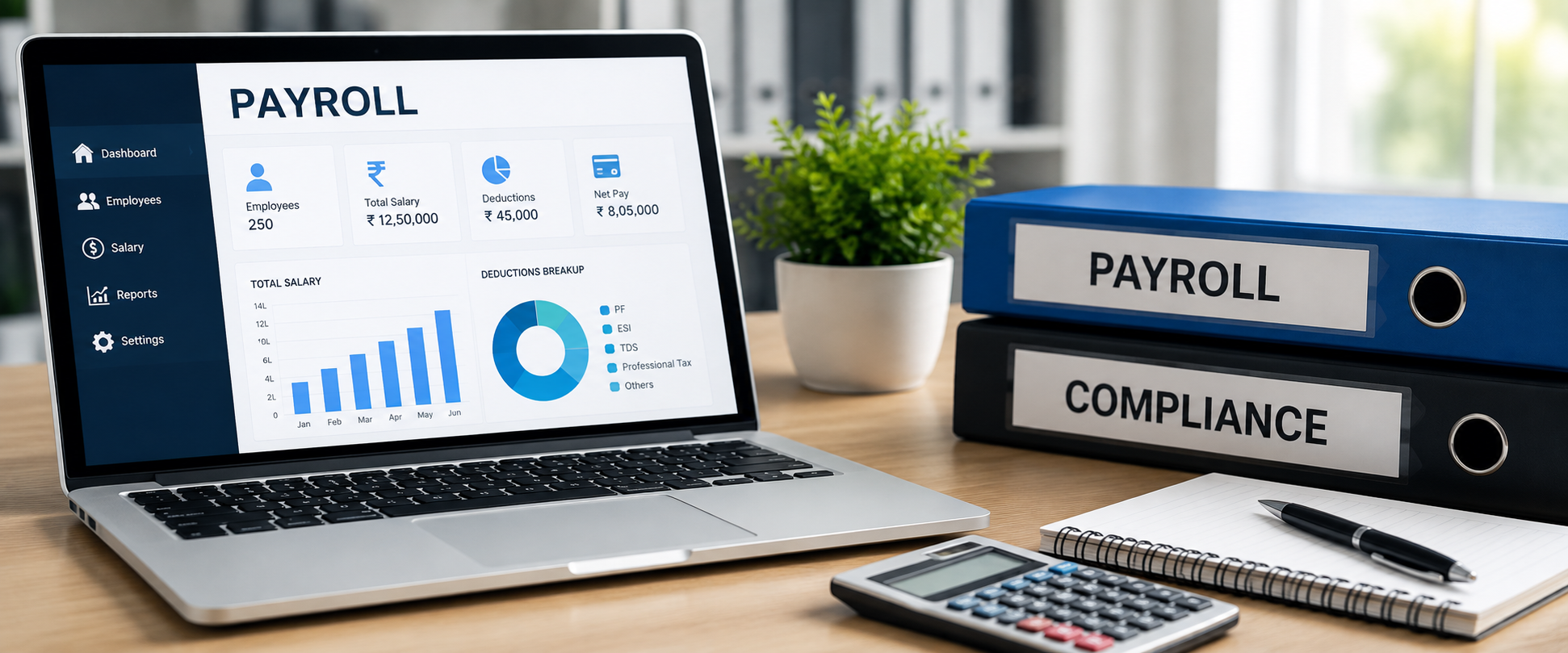

How to Choose the Best Payroll Outsourcing Company in Delhi

Running a successful business involves much more than generating revenue and managing customers. As organizations grow, employee management becomes increasingly complex, especially when it comes to payroll. Salary processing, statutory deductions, tax compliance, employee benefits, leave management, and government reporting all require precision and consistency. A single payroll mistake can result in employee dissatisfaction, financial penalties, compliance notices, and damage to a company’s reputation.

This is why businesses across Delhi are increasingly turning to payroll outsourcing services in Delhi. Instead of spending valuable time on administrative tasks, companies are partnering with professional payroll experts who ensure salaries are processed accurately while maintaining complete statutory compliance.

However, not every payroll provider offers the same level of expertise. Choosing the wrong partner can create more challenges than managing payroll internally. This guide explains what businesses should evaluate before selecting the best payroll outsourcing company in Delhi and how the right partner can support long-term business growth.

Payroll Outsourcing Is No Longer Just About Salary Processing

Many business owners still believe payroll outsourcing simply means calculating employee salaries every month. In reality, payroll has evolved into a comprehensive compliance function that combines financial accuracy, employee satisfaction, and statutory reporting.

A professional payroll outsourcing company manages salary computation, tax deductions, Provident Fund (PF), Employee State Insurance (ESI), Labour Welfare Fund (where applicable), professional tax (if applicable), leave management, reimbursements, bonus calculations, payslip generation, statutory returns, and year-end tax documentation.

As labour laws and taxation regulations continue evolving, businesses need payroll partners capable of adapting quickly to regulatory changes. Choosing experienced payroll outsourcing services India helps organizations maintain compliance while reducing operational risks.

Experience Matters More Than Company Size

One of the first factors businesses should evaluate is industry experience. A payroll provider that has worked with startups, SMEs, manufacturing companies, IT firms, retail businesses, healthcare organizations, and professional service companies understands that payroll requirements differ across industries.

Experienced providers are familiar with complex salary structures, contractual employees, statutory deductions, attendance integration, shift-based payroll, incentive calculations, and compliance reporting.

Rather than selecting a company based solely on its size, businesses should focus on proven expertise in handling payroll for organizations with similar operational requirements.

An experienced partner is far more likely to identify potential compliance issues before they affect the business.

Look Beyond Payroll Processing and Evaluate Compliance Expertise

Payroll and compliance are closely connected. Incorrect statutory deductions or delayed filings can expose businesses to penalties from government authorities.

The ideal payroll partner should possess strong knowledge of PF regulations, ESI compliance, Income Tax Act provisions, TDS deductions, labour law requirements, employee documentation, and payroll reporting obligations.

Businesses working with providers offering integrated corporate compliance services India benefit from comprehensive compliance support rather than isolated payroll management.

This integrated approach simplifies administration while reducing legal and financial risks.

Technology Should Improve Accuracy, Not Replace Expertise

Modern payroll software has transformed how businesses process employee salaries. Automated calculations, digital payslips, attendance integration, leave management, employee portals, and cloud reporting improve efficiency significantly.

However, software alone cannot ensure compliance.

A payroll provider should combine advanced technology with experienced payroll professionals who review calculations, monitor regulatory updates, and resolve complex payroll situations.

Businesses should ask whether the provider offers secure cloud access, payroll reports, employee self-service options, data backup, and integration with accounting systems.

Technology enhances payroll management, but professional expertise remains equally important.

Data Security Should Never Be Overlooked

Payroll contains some of the most sensitive information within an organization, including employee salaries, PAN details, Aadhaar information, bank account numbers, tax records, and personal information.

Before selecting a payroll outsourcing company, businesses should understand how employee data is stored, who has access to it, and what security measures protect confidential information.

Reliable providers implement secure servers, restricted user access, encrypted data storage, regular backups, and confidentiality policies.

Strong data security not only protects employees but also strengthens business credibility.

Accuracy Is More Valuable Than Speed

Many payroll providers promise quick salary processing. While speed is important, accuracy should always receive greater priority.

Incorrect salary calculations, missing deductions, duplicate payments, or taxation errors create unnecessary confusion and affect employee trust.

Ask prospective payroll providers about their review process before salary disbursement. Professional organizations generally implement multiple verification stages to minimize calculation errors.

Reliable business compliance solutions India focus on delivering accurate payroll consistently rather than simply processing salaries quickly.

Scalability Is Essential for Growing Businesses

Businesses rarely remain the same size for long. A company with twenty employees today may have two hundred employees within a few years.

The payroll partner selected today should be capable of supporting future growth without requiring businesses to migrate to another provider.

Scalable payroll services accommodate additional employees, multiple branches, different salary structures, attendance systems, reimbursement policies, and statutory requirements as organizations expand.

Choosing a scalable provider eliminates operational disruption during business growth.

Reporting and Analytics Add Significant Value

Modern payroll outsourcing extends beyond salary processing.

Management teams increasingly rely on payroll reports for workforce planning, budgeting, cost analysis, tax forecasting, and business decision-making.

A good payroll provider should generate customized reports covering salary expenses, departmental costs, statutory liabilities, employee benefits, tax deductions, and compliance status.

Access to meaningful payroll analytics improves financial planning while helping leadership teams make informed strategic decisions.

Customer Support Makes a Significant Difference

Payroll deadlines leave very little room for delays.

Businesses should evaluate how quickly payroll providers respond to employee queries, management requests, compliance questions, or urgent payroll corrections.

Dedicated relationship managers, responsive support teams, and experienced payroll consultants create a significantly better client experience.

Reliable customer support becomes particularly valuable during financial year-end, audits, employee onboarding, salary revisions, and statutory filing periods.

Integration with Accounting and Compliance Services

Payroll should not operate independently from the rest of the business.

Salary expenses directly affect accounting, taxation, financial reporting, budgeting, and statutory compliance.

Companies offering accounting outsourcing services India, payroll management, taxation support, and legal compliance services India under one roof simplify business operations considerably.

Integrated service models reduce duplication of work while improving reporting accuracy across departments.

Businesses also benefit from having a single point of contact for multiple compliance requirements.

Reputation and Client Portfolio Matter

Before finalizing a payroll outsourcing company, businesses should review client testimonials, industry experience, online reputation, and existing client portfolio.

Long-term client relationships often indicate consistent service quality.

Businesses should also ask whether the provider has experience working with companies of similar size and industry.

An established reputation reflects operational reliability and professional expertise that cannot be measured through pricing alone.

Cost Should Be Evaluated as an Investment

Many organizations choose payroll providers solely based on the lowest quotation.

While controlling costs is important, selecting the cheapest option often results in hidden expenses associated with payroll errors, delayed filings, compliance notices, employee dissatisfaction, and operational inefficiencies.

Professional payroll outsourcing should be viewed as an investment that improves productivity, strengthens compliance, reduces business risks, and allows management teams to focus on strategic growth initiatives.

The right payroll partner ultimately delivers value far beyond monthly processing costs.

Why Delhi Businesses Prefer Professional Payroll Partners

Delhi has one of India’s most competitive business environments, with companies operating across manufacturing, IT, consulting, healthcare, education, retail, logistics, and professional services.

Growing businesses require payroll systems capable of supporting changing workforce structures while maintaining complete statutory compliance.

Professional payroll outsourcing companies help organizations manage increasing compliance responsibilities without adding administrative complexity.

By partnering with experienced experts, businesses improve operational efficiency while remaining prepared for future regulatory changes.

Conclusion

Selecting the best payroll outsourcing company in Delhi is a strategic business decision rather than an administrative one. The right payroll partner not only processes salaries accurately but also strengthens statutory compliance, improves employee satisfaction, protects confidential data, and supports long-term business growth.

Businesses should evaluate industry expertise, compliance knowledge, technology capabilities, reporting, customer support, scalability, and overall service quality before making a decision.

Organizations choosing experienced payroll outsourcing services in Delhi, corporate compliance services India, accounting outsourcing services India, business compliance solutions India, and legal compliance services India gain a reliable compliance partner capable of supporting sustainable growth in an increasingly regulated business environment.

As businesses continue expanding across Delhi NCR, payroll outsourcing is no longer just about convenience. It has become an essential component of operational excellence, regulatory compliance, and business success.